
Your Worldloppet Race Is One Day. Plan the Whole Trip.
Guest editorial by Ryan J. Kime, MD, MBA
Months of preparation lead to the starting line of a Worldloppet race. But while we spend weeks and months thinking about training, technique and equipment, the decisions around travel, familiar nutrition, sleep, race-day logistics and the journey home deserve a plan too.
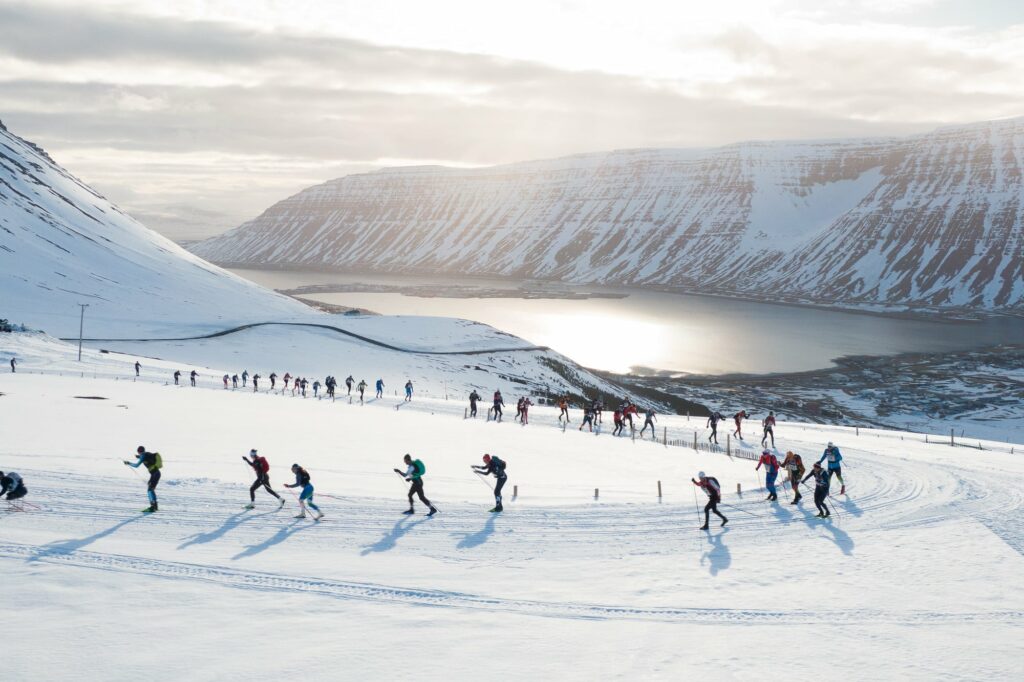
Imagine arriving at your accommodation with your skis intact, your race entry confirmed and months of training behind you. You check the shuttle information for the following morning and discover one small problem: the bus leaves at 06:15. Breakfast opens at 06:30.
Nothing has changed about your fitness. Yet suddenly, part of your race-day plan needs rebuilding in an unfamiliar place.
That is why every ski marathon has, in a way, two courses: the one marked in the snow and the invisible one you navigate before and after it.
The first demands fitness, technique and endurance. The second takes you through travel, meals, hydration, equipment, sleep, warmth and the journey home. A few deliberate decisions can make that second course considerably easier.
My years in emergency medicine, work in nutrition education and experience with demanding ski trips have reinforced one practical lesson: the best preparation connects the important details without making everything more complicated. These four checkpoints help you see the entire event journey.
1. Before leaving home
Start with the things that cannot easily be changed: flights or other travel arrangements, accommodation check-in, registration deadlines, the official start time and your journey home.
Record the important times in the local time zone of your destination and check the organizer’s latest participant information before leaving. It can also be useful to save the most important details on your phone so that they remain accessible without reliable internet.
Then look at the gaps between those fixed points.
A flight arrival time, for example, is not the same as your arrival time at the hotel. Collecting skis and baggage and arranging onward transportation can take longer than expected. Check whether transporting skis needs to be reserved in advance, how late hotel check-in is possible and where you could find a familiar meal if you arrive after normal dinner service.
When it comes to nutrition, traveling to a ski marathon is probably not the right moment to reinvent routines that have worked throughout your training.
One simple contingency plan can also make a big difference. If your journey is delayed, what can you remove from your schedule? Who do you need to contact? And what alternatives does the race organizer offer for registration or bib collection?
Keep the essentials fixed and allow everything else some flexibility.
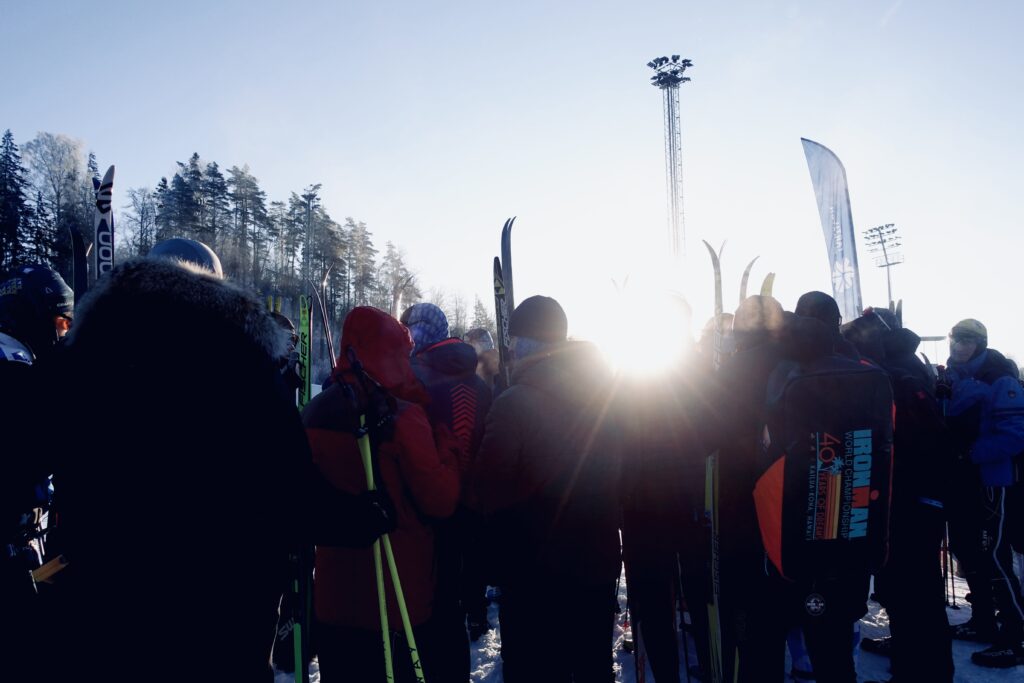
2. Before the start
Once you arrive, confirm the details that are sometimes difficult to understand from home.
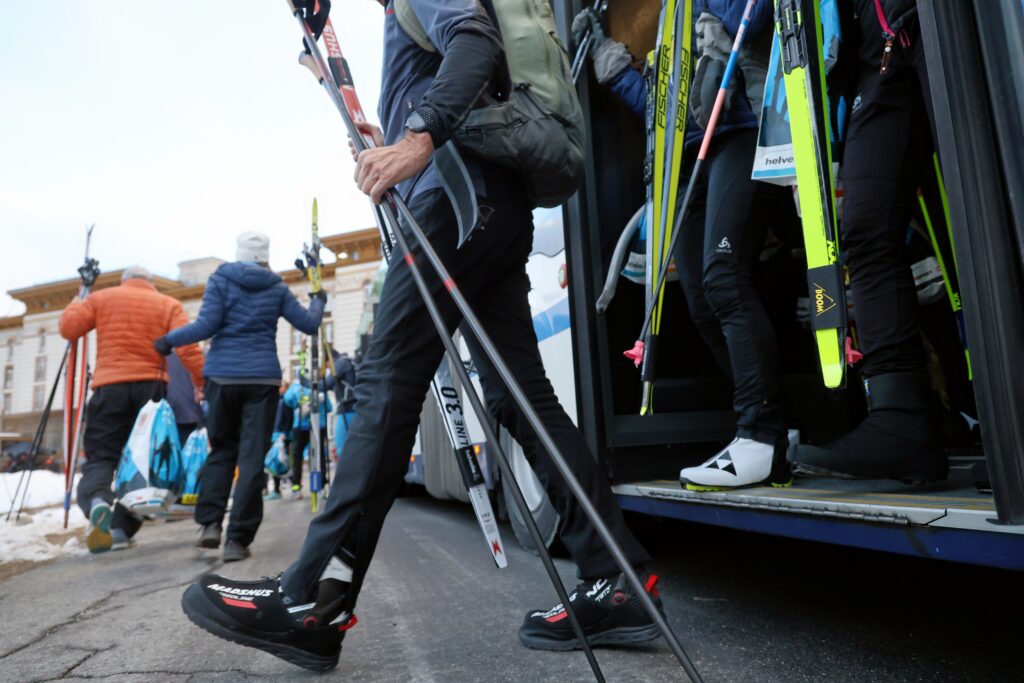
Where exactly is bib collection? Which stop does the race shuttle leave from? How will your skis get to the start? If you are using professional waxing support, when do your skis need to be dropped off and when can you collect them?
Race rules and equipment requirements can also differ between events, so checking the latest information from the organizer should always be part of your preparation.
If you want to inspect part of the course beforehand, give that reconnaissance a specific purpose. Perhaps you want to understand the start area or see an accessible section of the course. Learn what you need to know without turning the day before the race into another endurance session.
And then there is breakfast.
Connect breakfast with your departure timetable before race morning arrives. Check the hotel’s opening hours, what food is available and whether you have access to storage or basic preparation facilities.
If breakfast starts after the race bus leaves, prepare a familiar alternative the night before.
The same principle applies during the race. Look at the organizer’s information about refreshment stations and consider where support is available and what is being served. Base your plan around food, fluids and pacing approaches that you have already practiced rather than experimenting with unfamiliar products on race morning.
Finally, work backwards from the official start time. Include transportation, queues, ski preparation and enough warm clothing while waiting.
The goal is simple: arrive at the start with as few unresolved decisions as possible.
3. After the finish
The marked course ends at the finish line.
The invisible course does not.
Where are your dry clothes? Where will you meet your traveling companions? Where can you get food, fluids and warmth? And how are you getting back to your accommodation?
These are small questions before the race. After several hours of skiing, they can feel considerably more important.
Check the race organizer’s bag-drop and collection procedure beforehand. Keep dry clothing protected from snow and moisture and follow the event’s labelling requirements.
If you are traveling with family or friends, choose a meeting point and consider a backup location in case mobile phone service is overloaded around the finish area.
Also check the return transportation arrangements and leave room for the possibility that your race takes longer than expected or that queues form after the finish.
Recovery does not need to become complicated. Dry clothing, familiar food, fluids, warmth and some rest cover many of the immediate priorities.
Having them easily available also means that you can concentrate on something equally important: enjoying the people, destination and atmosphere that made you travel to the event in the first place.
4. Before returning home
Race day tends to dominate our thoughts, but the following morning deserves a little attention too.
Check hotel checkout times, ski storage, transportation and packing arrangements before race day.
If your Worldloppet journey continues directly to another ski marathon, treat the next event separately. Transportation, services, race regulations and schedules may be completely different.
At the same time, do not plan every minute of the journey.
Leave enough flexibility for how you feel after the race and for what the destination has to offer. A relaxed meal with friends, exploring the host town or simply taking an easy walk the following morning may eventually become as memorable as your finishing time.
That is really the purpose of planning the invisible course.
Not to control every detail, but to make a few important decisions early, have sensible alternatives available and create more space to enjoy the skiing.
Your seven-point whole-trip check
Before traveling to your next Worldloppet race, take a few minutes to check:
1. Arrival
Can you realistically get from your point of arrival to your accommodation?
2. Registration
Where and when is bib collection, and do you have the latest participant information, Worldloppet Pass?
3. Food and fluids
Will familiar options be available when you actually need them?
4. Equipment
Have you arranged transportation, storage, waxing and checked event requirements?
5. Timing
Do the breakfast, shuttle and start schedules actually fit together?
6. Finish
Where are your dry clothes, food and meeting point – and how are you getting back?
7. The following day
Have you considered checkout, your journey home and at least one backup option?
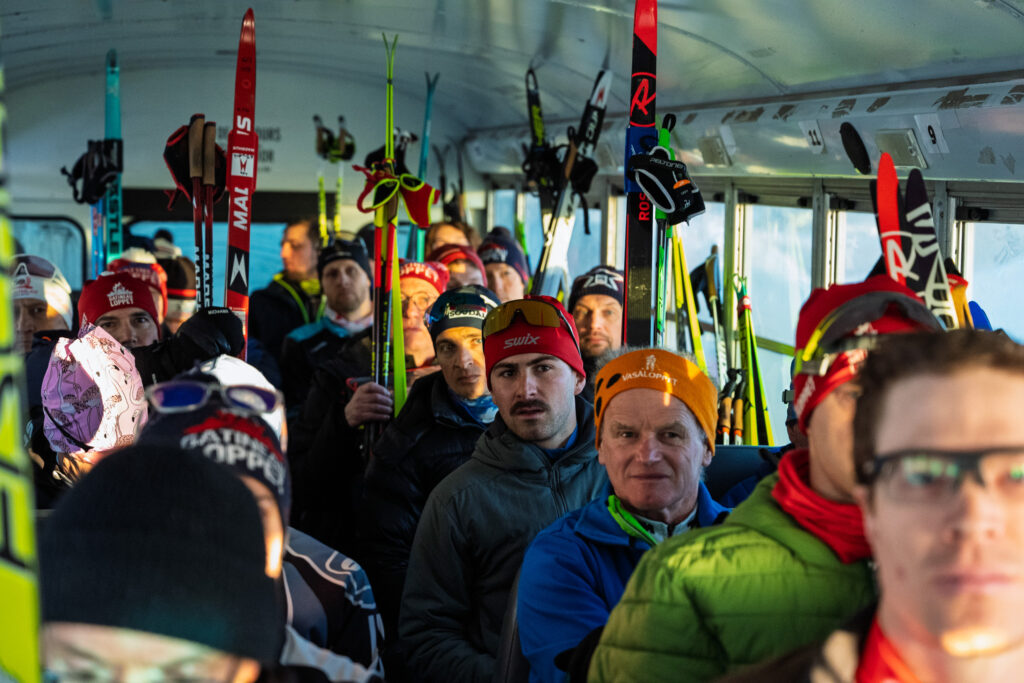
You have spent months preparing for the course marked in the snow.
Give the invisible course a few minutes of attention too.
Then, when breakfast and the race bus finally agree, you can turn your attention back to what you came for: skiing.
About the author
Ryan J. Kime, MD, MBA is the founder of Free Soul Ski Method™ and a former emergency medicine physician, holistic nutritionist and ski instructor at Palisades Tahoe. His nonclinical ski-performance education draws on medicine, nutrition training and extensive skiing experience to connect fueling, hydration, sleep, pacing, travel and recovery with practical preparation for time on snow.
Learn more: https://freesoulskimethod.mailerpage.io/
Free Soul Ski Method™ is an independent educational business, separate from Ryan’s Palisades Tahoe ski-instructor affiliation. This article provides general educational information and does not constitute individual medical advice.
BACK