From the Tropics to the Worldloppet Trails – The story of Malaysia’s first Master
A Malaysian’s Seven-Race Mission Across the Northern Winter
Some ideas sit quietly in the back of your mind for years. This one had been waiting for almost a decade. After collecting three Worldloppet Gold stamps — Kangaroo Hoppet in Australia, Merino Muster in New Zealand, and König Ludwig Lauf in Germany — my husband and I found ourselves talking about the future of our skiing journey after the Merino Muster last year.
Well… to be honest, it was mostly me being the mastermind.
I felt restless. Like something unfinished was calling me back. I wanted something big. Something audacious. Something difficult enough to feel slightly unreasonable. So I proposed a mission: “What if we finally complete the ten Worldloppet ski marathons and become Worldloppet Masters?”
For me, the motivation went even deeper. If successful, I would become Malaysia’s first Worldloppet Master, either Gold or Silver. All this time I had quietly been studying the Worldloppet race calendar for years, waiting for the perfect alignment of races. In 2026, the calendar finally opened a window:
Seven races. Seven weeks. Across Europe.
The plan was deceptively simple: fly into Munich, start with Dolomitenlauf, and then follow the snow across the continent until the journey ended at the most iconic ski marathon of them all — Vasaloppet.
Our winter itinerary looked like this:
• 42 km Dolomitenlauf, Austria (Free Technique) – 17 January
• 70 km Marcialonga, Italy (Classic Technique) – 25 January
• 50 km Jizerská 50, Czech Republic (Classic Technique) – 1 February
• 42 km Finlandia Hiihto, Finland (Free Technique) – 8 February
• 63 km Tartu Maraton, Estonia (Classic Technique) – 15 February
• 50 km Bieg Piastów, Poland (Classic Technique) – 21 February
• 90 km Vasaloppet, Sweden (Classic Technique) – 1 March
Seven races. Seven countries. Hundreds of kilometres on skis.
For someone born in Malaysia — a tropical country where snow simply does not exist — the journey itself already felt surreal.
Who is this skier?
Kathy Ismail is a Malaysian cross-country skier competing in international FIS races and long-distance ski marathons. She made her championship debut at the FIS Nordic World Ski Championships Trondheim 2025.
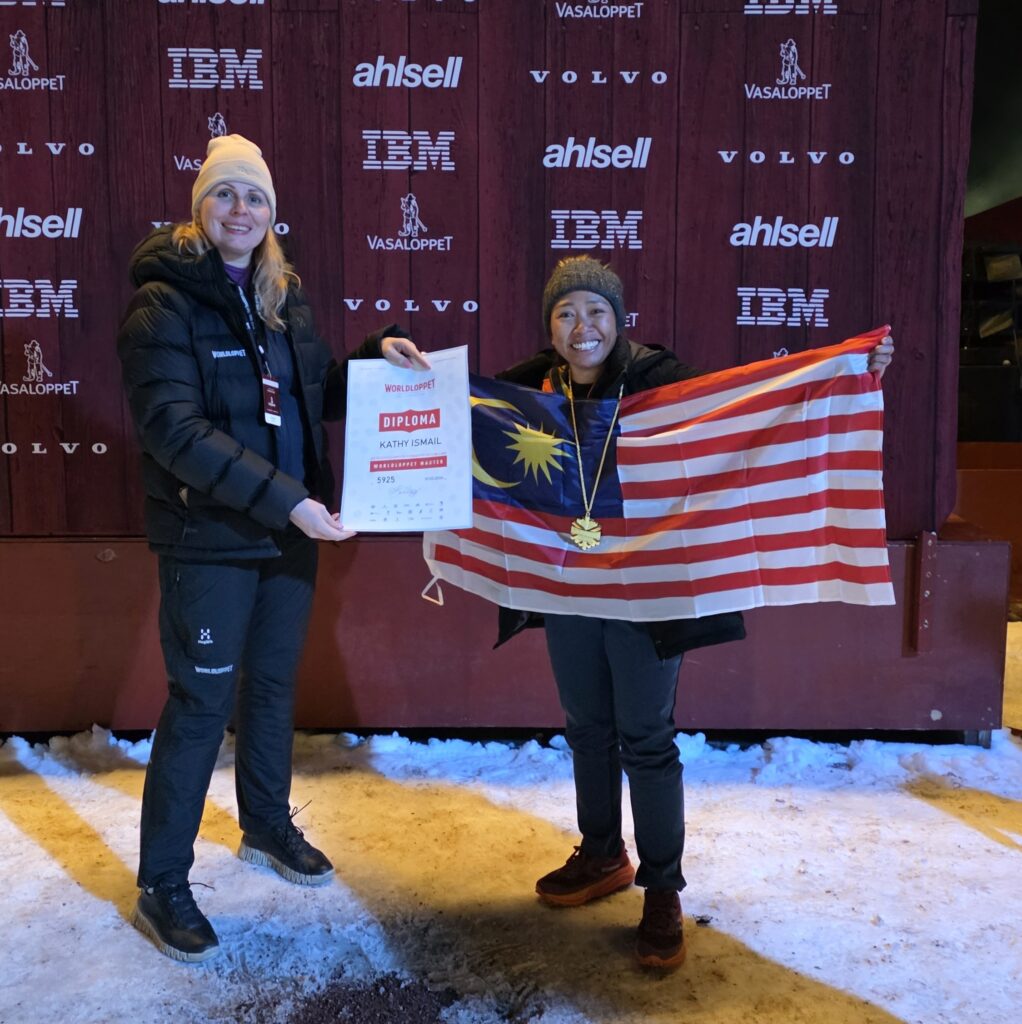
She is also an active competitor in the Worldloppet Ski Marathon Series, having completed major international events including the Vasaloppet (90 km). She achieved her goal to be Malaysia’s first Worldloppet Gold Master upon completion of the Vasaloppet in March 2026.
Kathy trains year-round in Australia and Europe using rollerski training, running, strength conditioning, and ski-specific endurance work.
Discovering cross-country skiing
My introduction to skiing began after I moved to Australia. Like many people, I started with downhill skiing in 2008. It was exciting, fast, and exhilarating. But when I tried cross-country skiing for the first time in 2012, something clicked immediately. I belong to this sport.
Instead of lifts and crowded slopes, there were forests. Silence. Snow-covered landscapes stretching endlessly into the distance. Gliding through that environment felt rhythmic, almost meditative. The movement required patience, balance, and technique — but when it worked, it felt effortless.
Somewhere along the way I discovered the world of citizen ski marathons, known as loppets.
My first race was the 21 km Australian Birkebeiner in 2016.
That race changed everything. Suddenly skiing wasn’t just a winter hobby. It became a personal challenge — a way to test fitness, endurance, and mental resilience. Each race pushed me a little further. Each winter, the distances grew longer and the terrain more demanding, as I seek new challenges.
Being the Malaysian on the start line
One of the most remarkable aspects of the cross-country skiing world is its sense of community. Despite racing thousands of kilometres from home, I rarely felt like an outsider. Quite the opposite. People were curious, welcoming, and often surprised. In almost every race I entered, I was the only Malaysian on the start line. And that often became the beginning of conversations.
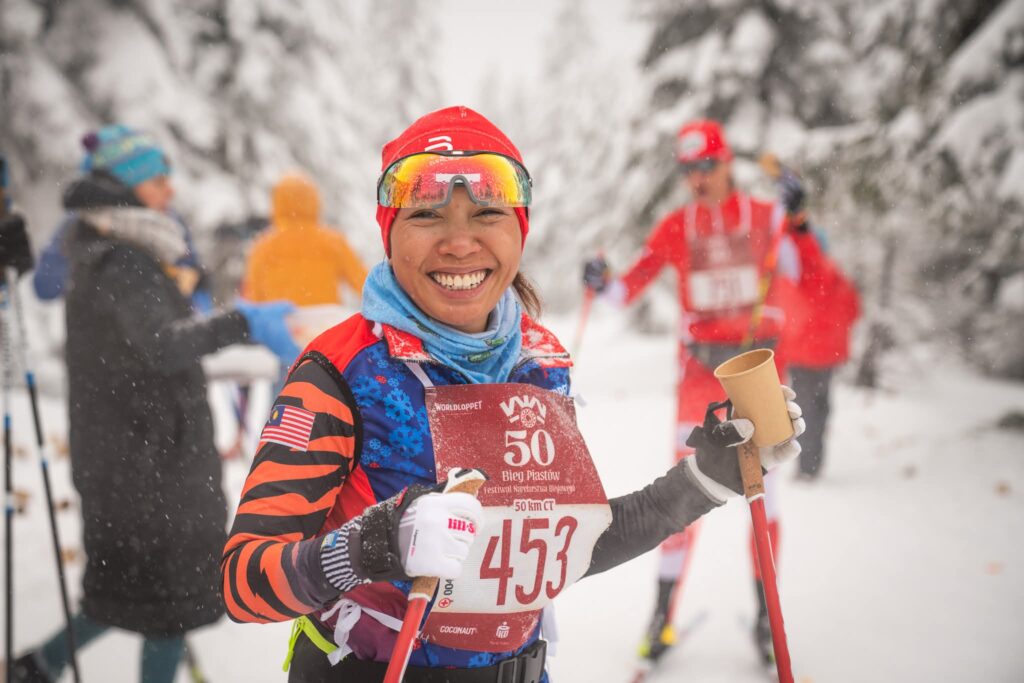
During races like Jizerská 50 and Bieg Piastów, strangers would ski alongside me and ask where I came from. When I answered “Malaysia,” the response was usually the same. “Wait… Malaysia? How do you ski?”
Sometimes the conversations went even further. At Vasaloppet one skier told me: “I had a friend from Southeast Asia who always wanted to do this race. Now that I’ve seen you do it, I’m going to tell them they have no excuse.”
Moments like that reminded me how powerful representation can be. When someone sees a person from a similar background doing something unexpected, the impossible suddenly feels achievable. You don’t have to grow up surrounded by snow to ski the Vasaloppet.
The races that nearly broke me
Every race on our journey was demanding. But two in particular remain etched in my memory.
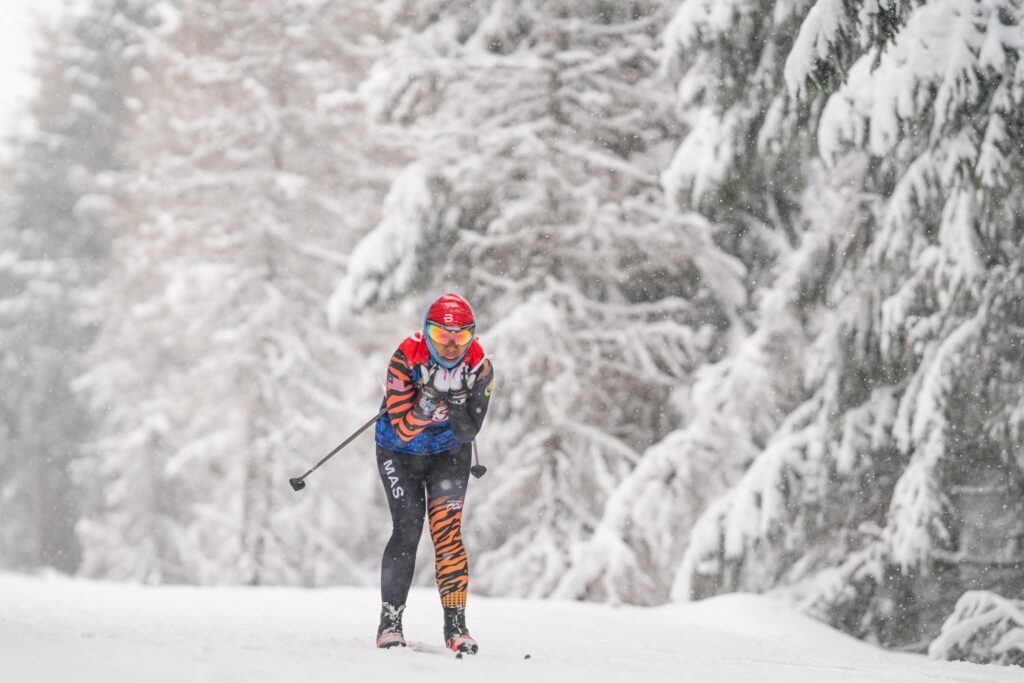
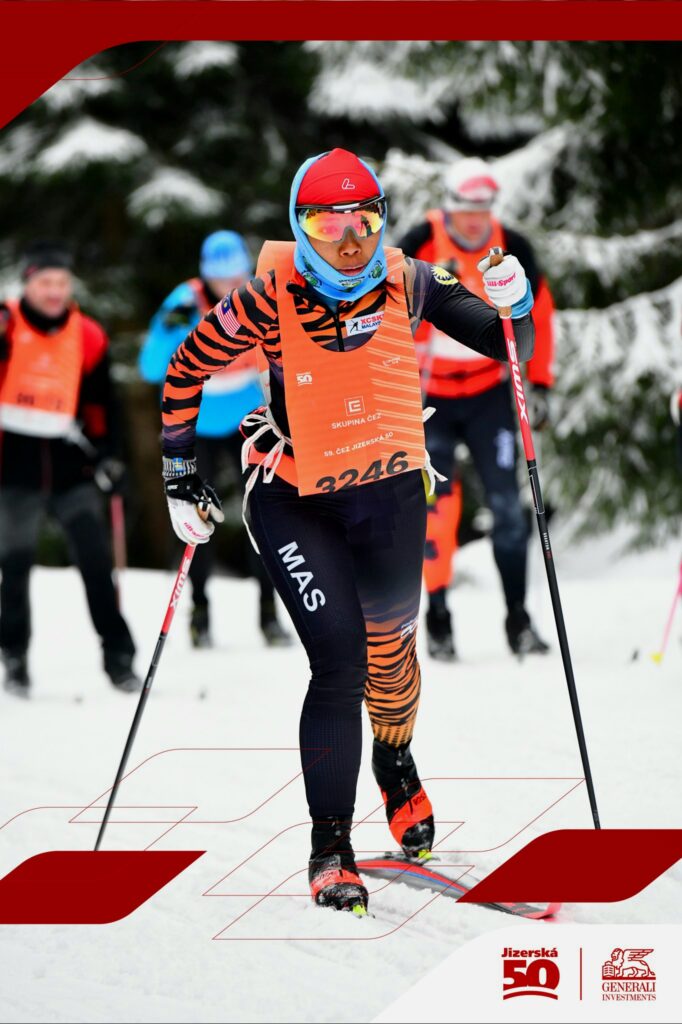
The 70 km Marcialonga in Italy was my first full marathon in classic technique. And the weather decided to make it unforgettable. Snow fell relentlessly throughout the race. Tracks disappeared under fresh powder. Descents turned into sheets of hard, icy snow.
My skis repeatedly iced up. No matter what I tried, I couldn’t get them to glide properly. Progress became painfully slow. At several checkpoints I wondered whether the officials might stop me from continuing. But every time doubt crept in, one thought pushed me forward. ‘I needed to finish’. Not just for myself — but for Malaysia, that I carried with me in my heart. So I kept moving. Kilometre after kilometre. Eventually, stubborn determination carried me up the infamous Cascata, to the finish line.
And then there was Vasaloppet
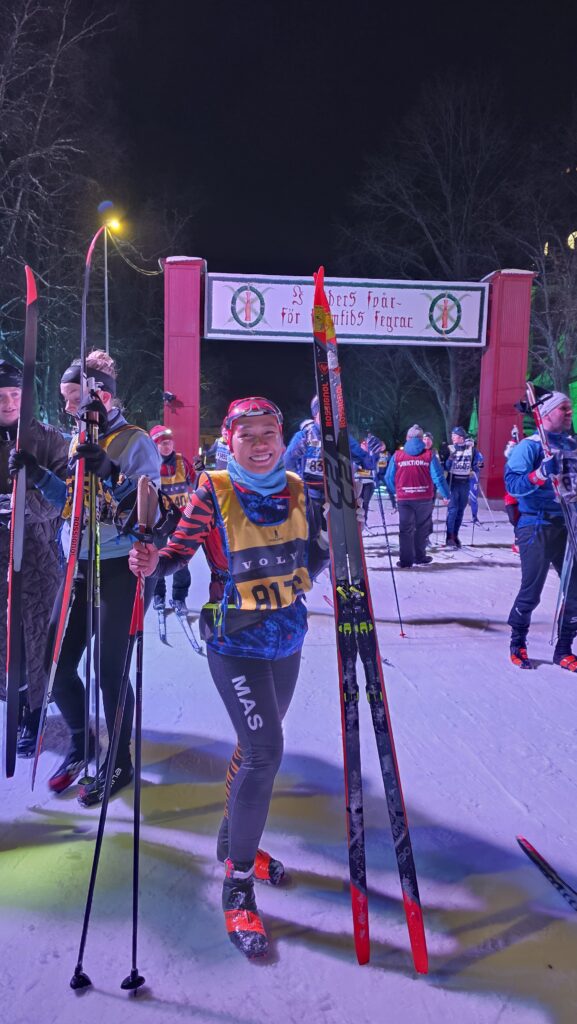
If Marcialonga tested my patience, Vasaloppet tested everything else. At 90 km, it was the longest race I had ever attempted and it began with chaos. Just before the start, heavy snow had fallen over the starting field in Sälen. Ten minutes before the gun went off, I suddenly realised something terrifying. I couldn’t find my skis. Panic set in. Fortunately, I spotted them just in time — though I’m fairly certain a few nearby skiers were amused by my frantic search.
Then the race began. 14,500 skiers surged forward. The famous starting hill quickly became a slow-moving wall of people climbing in herringbone steps. There was no way around it. Starting in Wave 8, I simply had to move with the crowd. Three kilometres later I checked my watch. The projected finish time suggested I might arrive around 10:30 pm.
That was the moment I realised something had to change. If I wanted to finish, I had to push harder — much harder. So I did. By the time I reached Hökberg and Eldris, my pace had increased dramatically. The final kilometres felt like a sprint, even though my body was already completely exhausted.
After nearly 12 hours on skis, I crossed the finish line in Mora. The expression in my finish-line photos says everything. Relief. Exhaustion. Mission Accomplished.
Because completing 90 kilometres in those conditions is not something you forget.
Training for the impossible
People often ask how someone from a tropical country trains for ski marathons. The truth is: training happens all year. Running and trail running with poles form the base of my endurance training. For ski-specific strength, I rely heavily on rollerskiing and double-poling on the SkiErg machine. Like many daily athletes, I balance training with work, family life, and everyday responsibilities. Consistency matters more than perfection.
Looking ahead
Standing among thousands of skiers from around the world, one thought kept returning to me. I hope this won’t always be unusual. I hope more Southeast Asians will discover the magic of cross-country skiing and the Worldloppet races. Because the truth is simple: Even if you grow up in a tropical country…
you can still dream of skiing across frozen forests and finishing one of the world’s great ski marathons.